Ukraine’s Identity Crisis Before the War
For decades after Ukraine declared independence from the Soviet Union in 1991, the country struggled with an identity crisis. The western regions leaned strongly toward a Ukrainian national identity, while eastern and southern cities like Kharkiv, Odessa, and Donetsk remained deeply Russified. Russian language, culture, TV shows, and music dominated daily life. Even President Volodymyr Zelensky built his early career as a comedian performing in Russian.
Unlike Poland and the Baltic states, which experienced rapid growth after joining Europe, Ukraine remained stagnant, tied economically and culturally to Russia. The lack of progress delayed the growth of a confident Ukrainian identity.
Table of Contents
The Orange Revolution and Early National Awakening
Things began to change during the 2004 Orange Revolution, when Ukrainians challenged corruption and electoral fraud. That movement planted the seeds of a modern national identity.
Street signs began to change from Russian to Ukrainian, schools prioritized the Ukrainian language, and media gradually reflected a European orientation. But the transformation was slow. By 2013, most Ukrainians still spoke Russian daily, even though their aspirations leaned westward.
Putin’s First Mistake: Yanukovych and Maidan
In 2010, Viktor Yanukovych won the presidency on a pro European promise. Yet under pressure from Moscow, he abandoned his EU deal. This sparked the Revolution of Dignity (Maidan) in 2013–2014.
Protesters filled Kyiv’s Independence Square, demanding democracy, accountability, and European integration. Yanukovych eventually fled to Russia, but Moscow viewed Ukraine’s defiance as an existential threat.
Instead of allowing Ukraine to drift naturally toward Europe, Putin intervened directly, planting the seeds of his greatest geopolitical miscalculation.
Putin’s Second Mistake: The 2014 Invasion
When Russia invaded Crimea and Donbas in 2014, it shifted Ukraine’s trajectory permanently. Until then, most Ukrainians were not openly hostile to Russia. They might have preferred closer ties with Europe but were still comfortable consuming Russian culture.
After 2014, however, patriotism surged. The annexation of Crimea was seen as theft, while Moscow’s covert war in Donbas killed thousands. Ukraine began de-Russification moving away from Russian media, language, and symbols. Yet many Ukrainians still spoke Russian and watched Russian TV, a sign that the transformation was incomplete.
Putin’s Third Mistake: The 2022 Full-Scale Invasion
The turning point came with the February 2022 full-scale invasion of Ukraine. What had once been gradual became absolute.
Today, speaking Russian is often seen as an act of disloyalty. Cities like Kharkiv and Dnipro, once bilingual, are now overwhelmingly Ukrainian-speaking. The invasion unified Ukraine in ways unimaginable before.
Instead of weakening Ukrainian identity, Putin strengthened it beyond repair. Ukraine transformed from a neutral post-Soviet state into a nation defined by its resistance to Russia. NATO, once struggling for relevance, is now revitalized, and Ukraine’s army has become one of the most battle-hardened forces in the world.
Putin created the very identity he feared.
Independence Day Under Fire: Ukraine Stands Tall
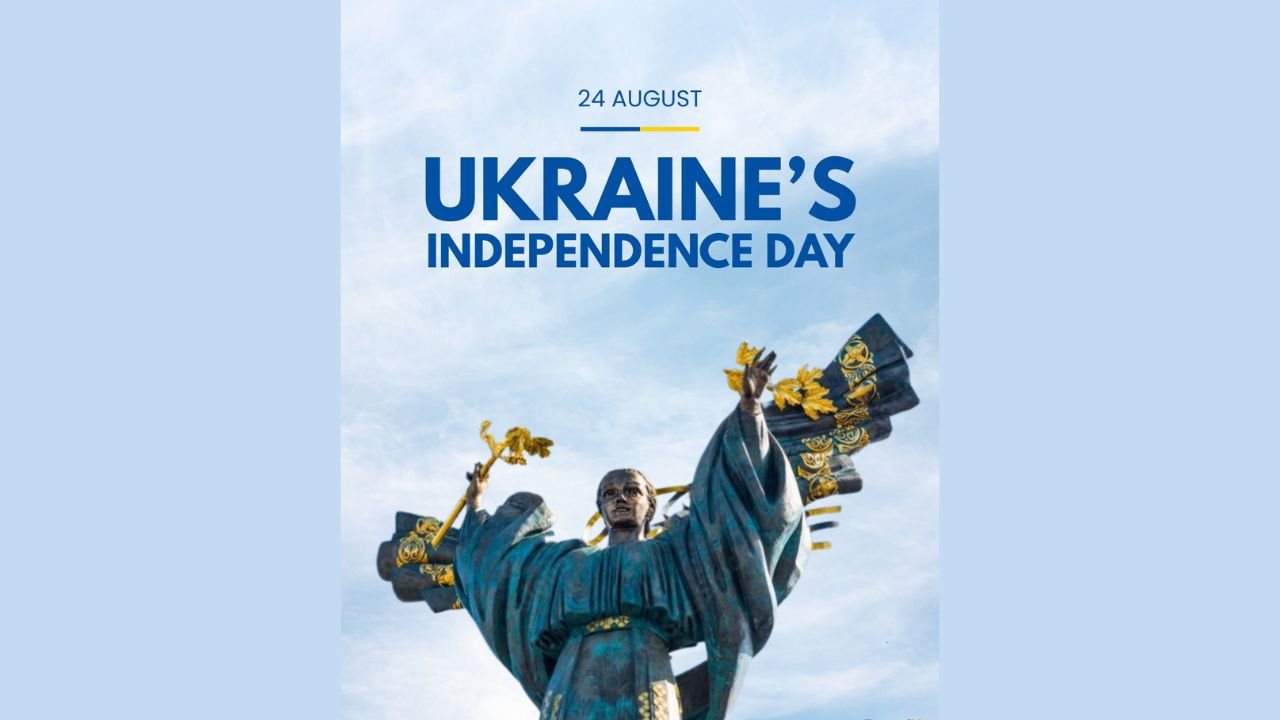
On August 24, 2025, Ukrainians marked Independence Day under constant missile and drone attacks. In Kharkiv, one of the most targeted cities, people were warned not to gather in large crowds. Still, the spirit of defiance was visible flags flew, soldiers marched, and civilians celebrated survival and sovereignty.
Independence Day now carries a sharper meaning: not just freedom from the Soviet Union, but survival against Putin’s Russia.
Fuel Shortages and Russia’s Logistical Nightmare
One of the lesser-discussed elements of the Ukraine war update is Russia’s growing fuel crisis. Diesel and benzine shortages plague both Russian forces and occupied territories.
- Russian trucks consume enormous amounts of fuel, sometimes 1.5 liters per kilometer under load.
- Ukraine’s targeted drone strikes on oil refineries and storage facilities in 2024–2025 have crippled reserves.
- Without reliable logistics, Russia struggles to reinforce breakthroughs or transport heavy ammunition.
This explains why Ukrainian forces have been able to counter attack swiftly in regions like Myrne, Dobropillia, Lyman, and Pokrovsk, undoing weeks of Russian advances in hours.
Refinery Strikes: Ukraine Hits Russia’s Economic Lifeline
Ukraine has also taken the fight deep into Russian territory, striking key infrastructure. The Ust-Luga terminal near St. Petersburg and the Novoshakhtinsk refinery were both hit, damaging Russia’s most profitable gas condensate facilities.
These strikes are more than symbolic they slash $400 million a month in Russian energy revenue and create global ripple effects. Oil prices spiked after the latest Ukrainian drone attacks, proving that the Ukraine war is also an energy war.
Meanwhile, Russia’s air defenses seem unable to stop these precision strikes, raising questions about Moscow’s military readiness.
Frontline Situation: Myrne and Donbas
As of August 25, Ukrainian forces are conducting localized offensives in multiple sectors:
- Myrne (potential to trap several thousand Russian troops)
- Dobropillia (“rabbit ears” breakthrough site)
- Lyman and Sumy
- Horikhove, Iskra, and Pokrovsk front
President Zelensky stated:
“Today, we have very positive results in Donbas. Good surprises for the Russians.”
While the situation remains fluid, momentum is shifting. Russia’s inability to move reinforcements quickly could give Ukraine strategic advantages in the coming weeks.
NATO and Western Support Grows
The Ukraine war update is also defined by growing Western unity:
- Norway and Germany pledged billions in aid, including Patriot missile systems.
- The United States committed to securing $1 billion monthly for weapons purchases.
- Canada and other NATO allies reiterated their long-term support for Ukraine’s sovereignty.
In contrast, Russia is increasingly isolated, facing both economic pressure and political pushback even from traditional allies like Armenia, where protests erupted against Russian military bases.
The Bigger Picture: Climate, Economy, and War
Beyond the battlefield, Russia’s worst harvest in nearly two decades adds another layer of instability. While corruption and war mismanagement play a role, the primary driver is climate change droughts, floods, and early frosts that also threaten global food security.
Ukraine’s resilience and adaptability stand in stark contrast. Despite devastation, it has managed to maintain exports, defend its territory, and strengthen its European identity.
Conclusion: Putin Built What He Feared Most
The Ukraine war update of August 25 shows a paradox: Putin wanted to erase Ukraine’s sovereignty, but instead, he built a stronger, united, European oriented Ukraine.
- Ukraine’s national identity is now irreversible.
- NATO has expanded and strengthened.
- Russia is economically weakened, militarily exposed, and politically isolated.
The truth is simple: All Russia had to do was nothing. Instead, Putin guaranteed that Ukraine will never again be under Moscow’s shadow.
Happy Independence Day, Ukraine.
