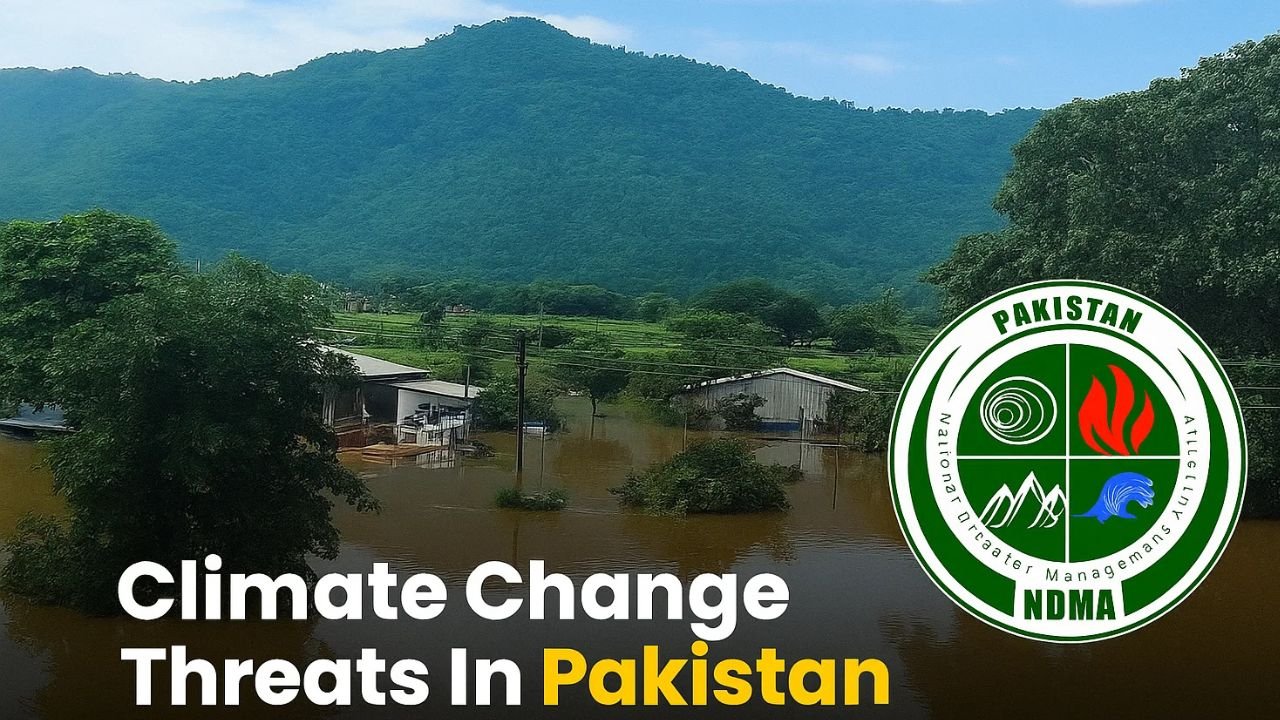
Pakistan is standing at the frontline of the global climate crisis, and the recent warning issued by the National Disaster Management Authority (NDMA) highlights the urgency of the situation. With rising temperatures, accelerated glacial melt, erratic rainfall, and more frequent extreme weather events, the country faces a future where floods, droughts, and heatwaves could devastate millions of lives. The NDMA’s climate change warning is not just a statement. it is a call for immediate preparedness, action, and global attention.
Table of Contents
Pakistan’s Vulnerability to Climate Change
Pakistan ranks among the top ten most climate vulnerable nations in the world. Despite contributing less than 1% of global greenhouse gas emissions, the country bears a disproportionate burden of climate impacts. Its geography, dependence on agriculture, and large population living along river basins make it extremely sensitive to environmental shocks.
The NDMA has emphasized that floods, glacial lake outbursts, and prolonged heatwaves are no longer distant threats they are recurring realities. For example, the catastrophic 2022 floods displaced millions and submerged nearly a third of the country. Such events demonstrate that climate change is not a looming possibility for Pakistan; it is already here.
Glacial Melt and the Growing Threat of GLOFs
One of the most alarming warnings by NDMA concerns the Himalayan and Karakoram glaciers, which are melting at an accelerated pace due to rising global temperatures. These glaciers feed the Indus River system, Pakistan’s lifeline for water, agriculture, and energy.
As glaciers melt, the risk of Glacial Lake Outburst Floods (GLOFs) increases dramatically. When natural dams formed by ice or debris burst, they release massive volumes of water downstream, often without warning. This phenomenon has already destroyed villages in Gilgit Baltistan and Khyber Pakhtunkhwa, and NDMA predicts more such events in the coming years.
Floods: From Seasonal to Catastrophic
Traditionally, Pakistan experienced seasonal monsoon flooding, but in recent years, the intensity and unpredictability of rainfall have shifted these floods into catastrophic events. The NDMA has cautioned that climate change is intensifying monsoon patterns, leading to heavier rainfall in shorter periods.
The 2022 super floods are a grim reminder:
- Over 33 million people were affected.
- 8 million were displaced from their homes.
- Nearly $30 billion in damages were reported, crippling the economy.
If effective disaster management strategies are not implemented, such floods will become more frequent and destructive.
Heatwaves: The Silent Climate Killer
Pakistan is also grappling with another deadly effect of climate change heatwaves. Cities like Jacobabad and Turbat have recorded some of the highest temperatures on Earth, surpassing 50°C.
NDMA highlights that heatwaves are silent killers. Unlike floods or earthquakes, their destruction is less visible but equally devastating. They cause water shortages, reduce crop yields, strain the power grid, and pose life threatening risks to vulnerable populations such as children, the elderly, and outdoor workers.
Droughts and Water Scarcity
While some regions are drowning, others are drying up. Climate change has created a cycle of floods followed by droughts. The Tharparkar desert frequently suffers prolonged droughts, leading to food insecurity and malnutrition.
Water scarcity is another critical issue. The Indus River system, fed by melting glaciers, faces declining water flow due to both climate change and mismanagement. According to NDMA, Pakistan could face absolute water scarcity by 2025 if immediate measures are not taken.
Urban Vulnerability: Cities at Risk
Pakistan’s rapidly growing urban centers Karachi, Lahore, Islamabad are unprepared for climate shocks. Poor drainage systems, unplanned construction, and lack of green infrastructure make cities extremely vulnerable to flooding and heatwaves.
NDMA has warned that unless climate resilient urban planning is adopted, cities will continue to suffer from urban flooding, heat islands, and environmental degradation.
NDMA’s Role in Climate Preparedness
The National Disaster Management Authority has taken several steps to prepare Pakistan for climate-induced disasters:
- Early Warning Systems: Enhancing forecasting of floods, heatwaves, and GLOFs.
- Community Awareness Campaigns: Educating local populations in vulnerable areas.
- Collaboration with International Organizations: Working with UN bodies and global partners for resources and expertise.
- Disaster Response Infrastructure: Developing evacuation plans, shelters, and rescue operations.
However, NDMA itself admits that preparedness alone is not enough without long-term climate adaptation policies at the national and provincial levels.
Impact on Agriculture and Food Security
Climate change is hitting Pakistan’s agriculture sector, which employs nearly 40% of the workforce and contributes significantly to GDP. Floods wash away crops, droughts reduce yields, and heatwaves destroy harvests.
Key crops like wheat, rice, and cotton are under severe threat, which could lead to widespread food insecurity. NDMA’s warning includes the possibility of climate induced famines if immediate action is not taken to safeguard agricultural practices through climate-smart technologies.
The Call for Climate Justice
Pakistan’s NDMA has also echoed a broader demand for climate justice. The country contributes little to global emissions but pays the highest price in human and economic terms. The international community must recognize this imbalance and provide support through:
- Climate financing for adaptation and resilience projects.
- Technology transfer for sustainable energy and water management.
- Stronger global commitments to cut greenhouse gas emissions.
Steps Pakistan Must Take
While international support is critical, Pakistan must also take domestic measures to adapt to climate change:
- Invest in Climate Resilient Infrastructure stronger dams, flood barriers, and urban drainage systems.
- Promote Renewable Energy reducing dependence on fossil fuels.
- Strengthen Water Management efficient irrigation and conservation techniques.
- Enhance Disaster Response Capacity better equipped emergency teams and resources.
- Implement Reforestation Programs large scale tree planting to combat desertification and urban heat.
Conclusion: A Warning We Cannot Ignore
The NDMA climate change warning is not just a forecast it is a roadmap of the dangers that Pakistan faces today and in the near future. The floods, droughts, and heatwaves of recent years are only a preview of what lies ahead if action is delayed.
As a nation, and as part of the global community, we must treat climate change as the defining challenge of our time. The survival of millions, the stability of the economy, and the preservation of ecosystems depend on how seriously we respond to this call for action.