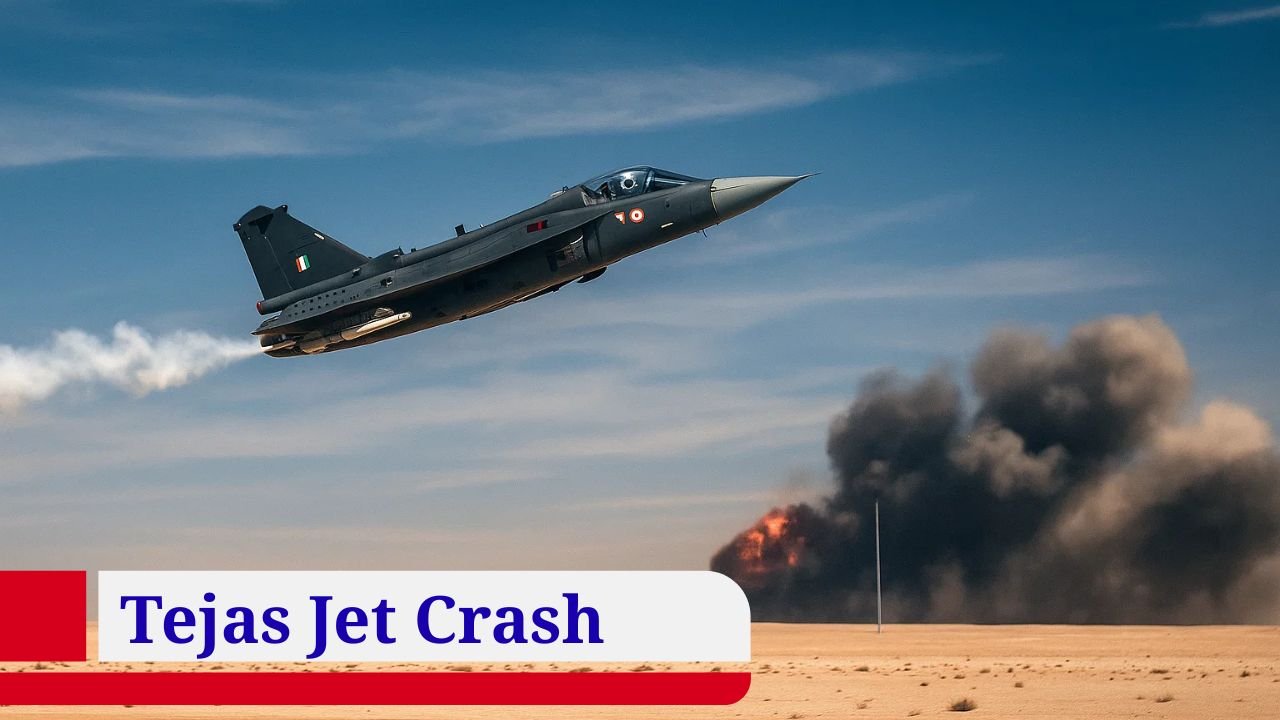
The Dubai Airshow turned tragic this week when an Indian Air Force (IAF) Tejas Jet crashed during a scheduled aerial display. The accident shocked spectators, raised questions about airshow safety protocols, and brought renewed attention to India’s home-grown fighter aircraft program. While the exact cause of the crash will be confirmed only after a technical investigation, early assessments and expert commentary are already shaping a deeper conversation around the Tejas project and India’s aviation ambitions.
The Crash: What Happened in Dubai
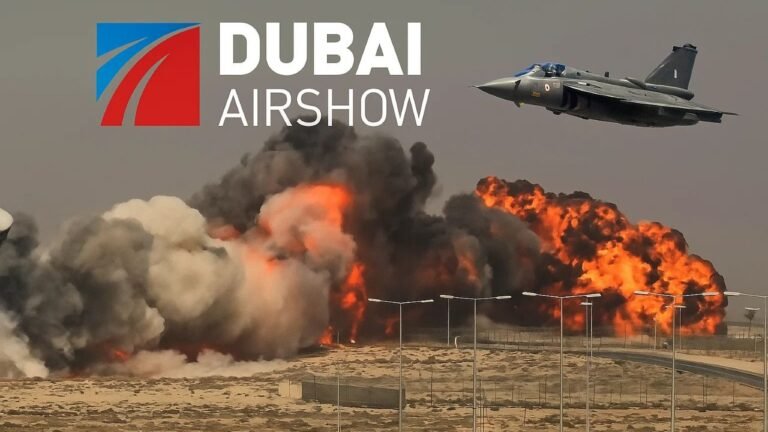
According to initial reports from the event, the Tejas Jet was performing a standard aerobatic maneuver when it suddenly lost altitude. Within seconds, the jet plunged toward the ground and erupted into flames, sending thick smoke into the air. Emergency teams rushed to the site immediately, but the impact was severe, leading to the pilot’s death.
Witnesses described the crash as “unexpected and extremely sudden,” noting that the aircraft appeared stable just moments before the loss of control. Airshow authorities temporarily suspended flight activities as rescue and security teams secured the area.
For India, the crash is not just a tragic loss of a trained pilot it also represents a blow to a crucial moment when the country has been promoting its indigenous defense capabilities on a global platform.
What the Tejas Fighter Jet Represents
The HAL Tejas Jet is one of India’s most important defense projects. Designed by the Aeronautical Development Agency (ADA) and manufactured by Hindustan Aeronautics Limited (HAL), the Tejas Jet is a lightweight, single-engine multi-role fighter aircraft intended to replace older jets in the Indian Air Force.
The aircraft has been a symbol of India’s push toward military self reliance under the Make in India initiative. In recent years, India has been working to pitch the Tejas Jet internationally, hoping to secure export contracts and expand its presence in the global defense market. The Dubai Airshow, attended by several international delegations, was an important opportunity to showcase the jet’s capabilities.
The crash has therefore created both emotional and strategic setbacks for India’s defense establishment.
Possible Causes Being Studied
While an official inquiry will determine the root cause, aviation analysts generally consider several possibilities when a display aircraft crashes:
1. Mechanical or System Failure
A malfunction in the engine, flight control system, or hydraulics can cause sudden loss of control especially during complex maneuvers.
2. Aerobatic Risk Factor
Airshow performances require high precision flying. A slightly mistimed turn or a maneuver executed at a lower altitude than required can dramatically reduce recovery time.
3. Pilot Workload and G-Forces
Display flights push aircraft and pilots to their limits. High G forces and rapid directional changes can affect situational awareness during critical moments.
4. External Conditions
Wind speed, air density, and atmospheric turbulence especially in open desert environments can affect aircraft stability.
5. Software or Sensor Issues
Modern fighter jets rely heavily on complex avionics. Even a small data error can influence control responses.
The investigation team in Dubai, along with Indian Air Force technical officers, will examine flight data recorders, engine components, and onsite footage to reach a conclusion.
Impact on India’s Defense Image
India has invested years into building the Tejas brand as a reliable, modern fighter platform. The aircraft has undergone multiple upgrades, including advanced avionics, enhanced radar systems, and improved weapon integration. The IAF has also placed large orders for the upgraded Tejas Mk-1A variant.
However, high profile crashes especially during international demonstrations often raise concerns among potential buyers. Countries evaluating the Tejas for procurement may temporarily adopt a “wait and see” approach until the investigation report is released.
This means that the findings of the inquiry will play a major role in shaping the international response.
Safety Protocols at Airshows Under Scrutiny
The Dubai crash has revived global conversations around the risks associated with airshow demonstrations. These events are meant to showcase aircraft agility, but they also involve maneuvers that pilots never perform in routine military operations.
Safety analysts argue that:
- Display altitude limits should be stricter.
- Some aerobatic maneuvers should be avoided near populated viewing areas.
- Aircraft undergoing flight demonstrations must undergo enhanced pre-flight diagnostics.
The Tejas Jet crash will likely influence future airshow safety rules, particularly for high-performance jets.
What Comes Next for the Tejas Program?
Despite the crash, experts believe that the Tejas program will continue but with a renewed focus on:
1. Technical Evaluation
HAL engineers will review every detail of the aircraft’s performance and maintenance history.
2. Software & System Checks
Flight-control logic, onboard computers, and safety redundancies may undergo further modifications.
3. Pilot Training for Airshows
The IAF may enhance specialized training for pilots selected for aerobatic displays.
4. Strengthening Global Communication
India will likely present a transparent, detailed technical report to reassure partner nations and potential customers.
A single crash does not determine the value or capability of a fighter jet many world-class aircraft have faced similar incidents during airshows. What matters is how effectively the investigation leads to improvements.
Conclusion
The crash of the Indian Tejas Jet in Dubai is a tragedy that has shaken both the aviation community and the Indian defense sector. While the accident has raised difficult questions, it has also opened the door for deeper reflection on safety standards, technological enhancements, and the future trajectory of India’s indigenous fighter program.
As the official inquiry moves forward, the findings will play a critical role in refining the Tejas aircraft and ensuring that such incidents are prevented in the future. For now, the focus remains on honoring the pilot, understanding the cause, and rebuilding confidence in one of India’s most ambitious aerospace projects.
