Table of Contents
Introduction
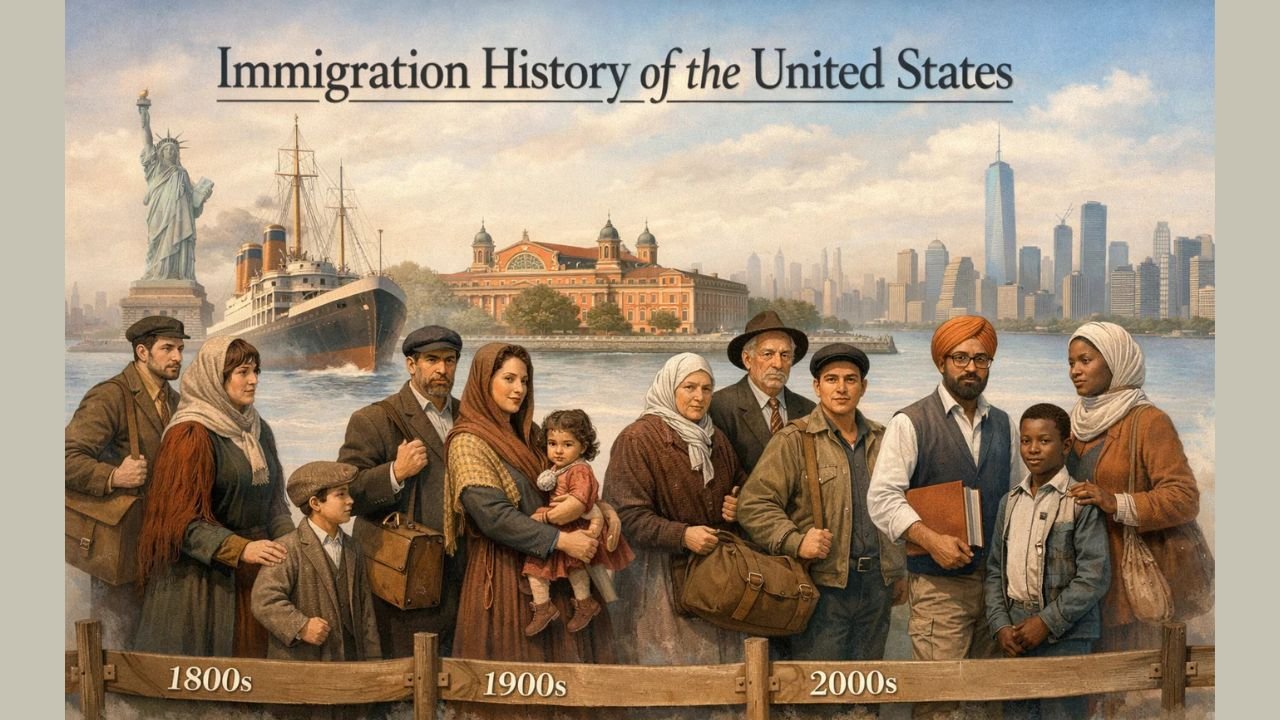
The immigration history of the United States is one of the most important stories behind America’s identity. The United States did not become what it is today overnight. Instead, it was shaped over centuries by people arriving from different parts of the world, each bringing their culture, skills, and traditions.
From early settlers to modern immigrants, immigration has played a key role in shaping American society, its economy, and even its languages. Understanding the immigration history of the United States helps explain why America is so diverse today.
Early Immigration History of the United States
The immigration history of the United States began long before the country officially existed.
Indigenous Peoples
The first inhabitants of the land were Native Americans, whose ancestors arrived thousands of years ago. They developed distinct cultures, languages, and societies long before European contact.
European Colonization
In the 1600s and 1700s, European settlers from England, Spain, France, and the Netherlands arrived in North America. They came for religious freedom, land, trade, and economic opportunity.
Because people arrived from different regions, early America was multilingual and multicultural. This early diversity later influenced policies such as why the U.S has no official languages, allowing linguistic freedom to continue.
Immigration History of the United States in the 19th Century
The 19th century marked a major turning point in the immigration history of the United States.
Industrial Growth and Labor Demand
As factories, railroads, and cities expanded, the U.S needed workers. Millions of immigrants arrived from:
- Ireland (especially during the Irish Potato Famine)
- Germany
- Italy
- Scandinavia
These immigrants helped build infrastructure and fuel economic growth.
Immigration and Cities
Cities like New York, Chicago, and Boston grew rapidly due to immigration. Neighborhoods formed around shared languages and cultures, laying the foundation for the languages spoken in the United States today.
Immigration History of the United States in the Early 20th Century
Ellis Island Era
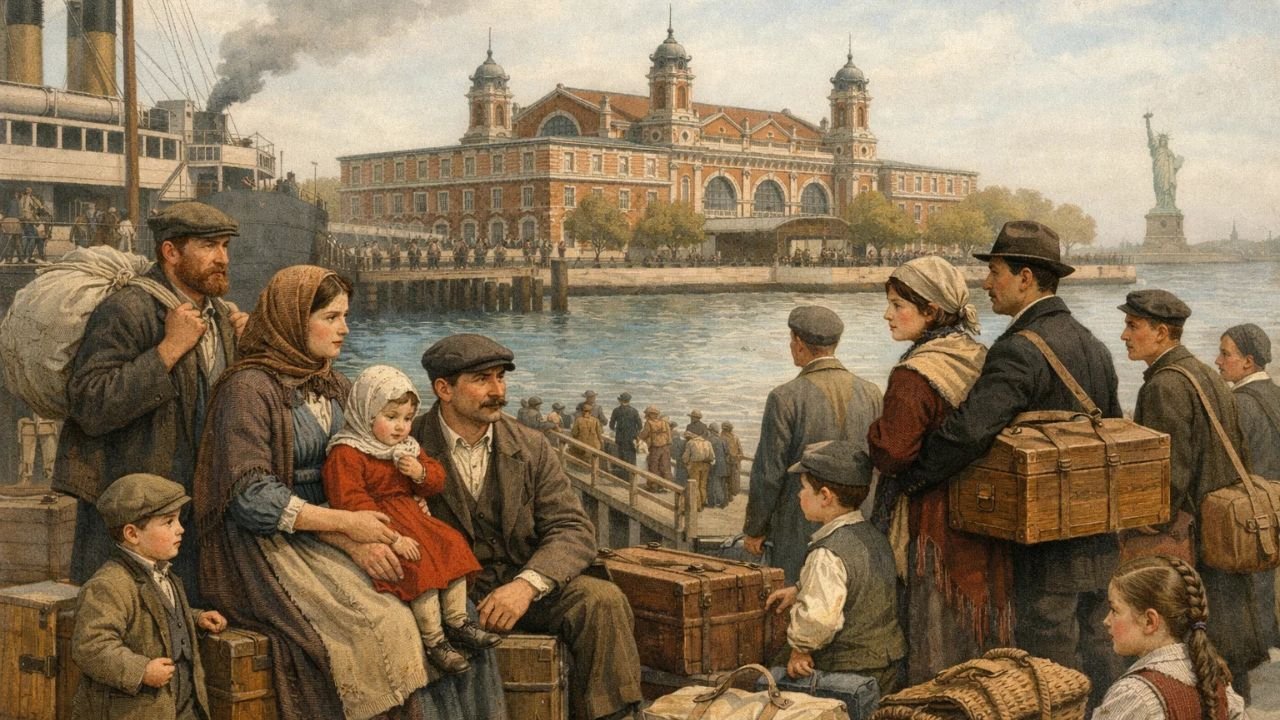
Between 1892 and 1954, Ellis Island served as the main immigration processing center. Over 12 million immigrants passed through it, making it a powerful symbol in the immigration history of the United States.
Immigrants were checked for health and legal requirements before being allowed to enter. Most were seeking safety, jobs, and a better future.
Immigration Laws
During the early 20th century, the U.S introduced immigration laws that limited entry from certain regions. These laws reflected economic concerns and social attitudes of the time.
This period shows that immigration policy has changed repeatedly throughout the immigration history of the United States.
Immigration History of the United States After World War II
After World War II, immigration patterns shifted.
New Regions of Immigration
Immigrants increasingly arrived from:
- Latin America
- Asia
- The Caribbean
This change significantly increased cultural and linguistic diversity.
Immigration and the Economy
Many immigrants filled essential roles in healthcare, education, technology, agriculture, and manufacturing. Their contributions strengthened the U.S economy and global influence.
According to the U.S. Citizenship and Immigration Services, immigration has consistently played a role in economic growth and workforce development.
Modern Immigration History of the United States
Today, immigration remains an important part of American life.
Legal Immigration
Millions enter the U.S legally through:
- Family sponsorship
- Work visas
- Student programs
Refugees and Asylum Seekers
The U.S has also accepted refugees fleeing war, persecution, and natural disasters, continuing a long tradition of humanitarian immigration.
A report by the Pew Research Center highlights how immigration continues to shape U.S demographics and society.

Immigration History of the United States and Language Diversity
One major outcome of the immigration history of the United States is linguistic diversity.
Because immigrants arrived speaking different languages, the U.S developed into a multilingual society. This is directly connected to the fact that the country never declared a national language.
As a result:
- English dominates naturally
- Spanish became the second most spoken language
- Many households speak languages other than English
This diversity explains why discussions about language and identity remain important in American culture.
Contributions of Immigrants to American Society
Immigrants have contributed to nearly every aspect of American life:
- Economy: Entrepreneurship and innovation
- Culture: Food, music, art, and traditions
- Education: Universities and research
- Technology: Science and engineering advancements
The immigration history of the United States shows that progress often comes from diversity and inclusion.
Challenges Faced by Immigrants
While immigration brought opportunity, it also came with challenges:
- Language barriers
- Cultural adjustment
- Economic hardship
Over time, many immigrants overcame these challenges and became deeply integrated into American society, passing their values and experiences to future generations.
Why Immigration History of the United States Still Matters
Understanding the immigration history of the United States helps explain:
- Why America is culturally diverse
- Why many languages are spoken nationwide
- Why immigration remains a central topic in U.S society
History shows that immigration is not a new issue it has always been part of America’s story.
Conclusion
The immigration history of the United States is a long and complex journey shaped by opportunity, struggle, and resilience. From early settlers to modern immigrants, each generation played a role in building the nation.
Immigration influenced American culture, economy, and language, helping create a society based on diversity and freedom. Understanding this history allows us to better appreciate how the United States became the nation it is today.
FAQs
Q1: Why is immigration important in U.S history?
Immigration helped build the economy, culture, and population of the United States.
Q2: When did most immigrants arrive in the U.S?
Major waves occurred during the 19th and early 20th centuries.
Q3: How does immigration affect language in the U.S?
Immigration contributed to the many languages spoken across the country today.
