Table of Contents
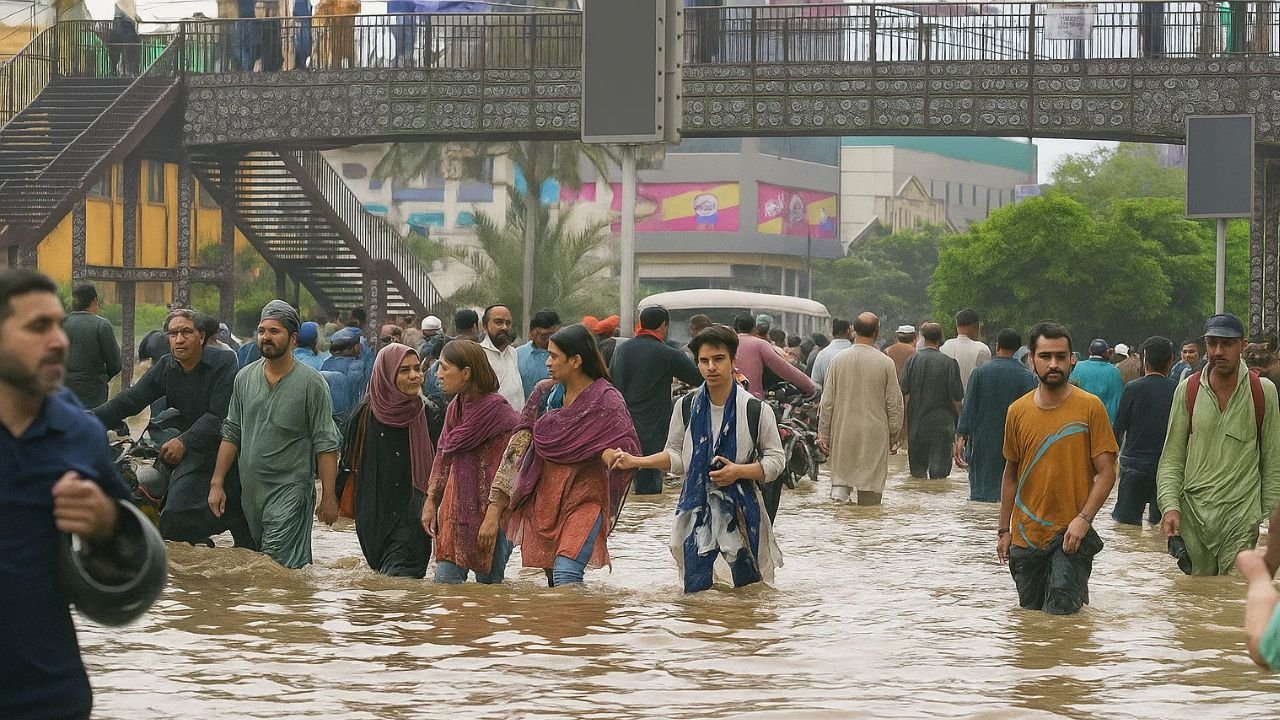
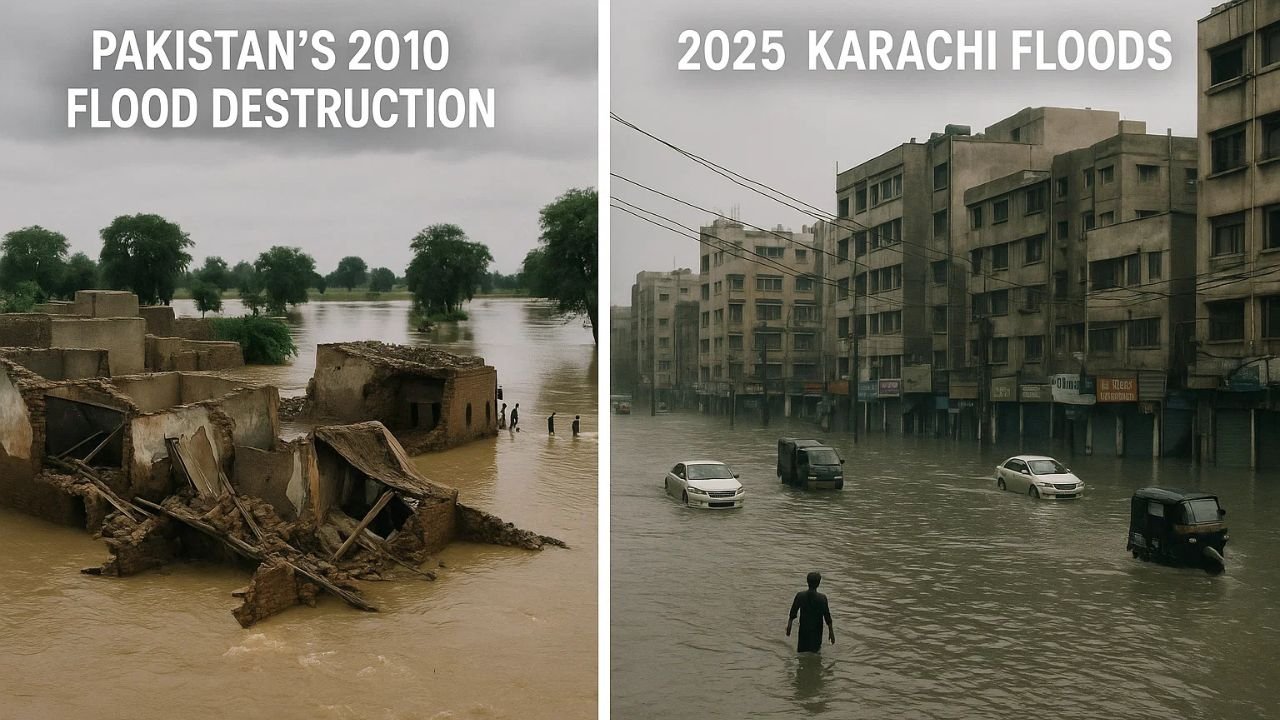
On August 19, Karachi Pakistan’s teeming port metropolis of over 20 million was pounded by unprecedented rainfall, bringing the city’s roads and neighborhoods under water. Local weather stations recorded storm totals as high as 170 millimeters in a single day (dawn), overwhelming the city’s aging drainage system. In many parts of the city, streets turned into rivers within hours. TV footage showed highways gridlocked and cars floating in floodwaters (dawn) Officials reported widespread power and cellphone outages, and the mayor ordered schools and businesses closed as the deluge continued into the evening (reuters)
The human cost in Karachi was steep. Rescue officials initially counted seven fatalities in rain related incidents on August 19 (dawn), rising to about ten by the next day (reuters)(apnews). Victims were struck by a range of hazards. In Gulistan-e-Jauhar, a wall collapse buried a family of five under debris four died on the spot (dawn). In Orangi Town a collapsing wall killed an eight year old boy, while elsewhere one man was electrocuted by a live wire and another died in a short circuit blaze at a petrol station (dawn). The provincial government’s spokesperson bluntly summarized the causes: people drowned, were trapped in road accidents or collapsing buildings, or were electrocuted by the floodwaters (reuters).
City residents took to social media to describe the chaos. “I have never experienced rain like this in my life,” said a 30 year old Karachi designer as she watched floodwaters flooding her car (reuters). Videos shared online showed main thoroughfares submerged to chest height, with stranded motorists and floating vehicles making national headlines (dawn). By late August 20, the government reported at least ten dead in Karachi’s floods (reuters) (apnews). One meteorologist lamented that Karachi’s “weak infrastructure” broken pipes and clogged drains simply could not cope with the deluge (aljazeera). Entire neighborhoods remained ankle- to chest-deep in murky water for hours, as residents bailed and pumps worked to clear the streets.
Widespread Monsoon Flooding Across Pakistan
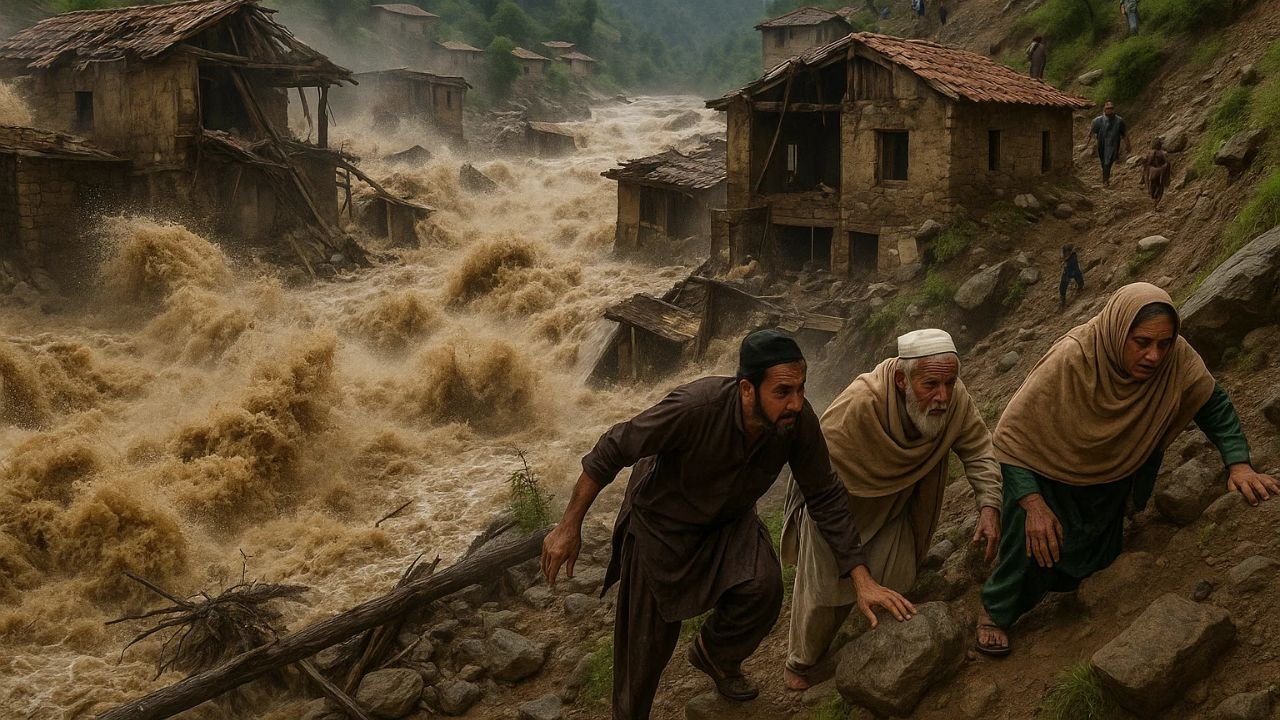
Karachi’s disaster was only part of a nationwide catastrophe. Since mid August a string of cloudbursts and monsoon downpours unleashed flash floods in Pakistan’s mountain north and foothills. In Khyber Pakhtunkhwa (KP) province alone, entire villages were swept away. For example, on the morning of August 18 the village of Dalori Bala in Swabi district was hit by a sudden cloudburst. Villagers recalled a “horrible, thunderous noise” at about 8 a.m. followed by a wall of water and boulders crashing through homes. “It took away everything in one go, in seconds,” said 20 year old college student Zeeshan Ali, who escaped with his family but lost his home (reuters). Rescuers recovered 37 bodies in that village after digging through the rubble; dozens more people were still missing (dawn).
In the mountainous Buner district, the onslaught was even more devastating. A massive cloudburst on August 16 struck without warning, flooding valleys and crushing villages. Local officials now say Buner has seen by far the highest death toll of any district. As of August 20, Buner had reported over 220 fatalities from the recent rains roughly two-thirds of them from a single flash flood event (IntlMedCorps-Aug2025FloodResponsePakistan) (dawn). The International Medical Corps described Buner as “catastrophic,” noting that over 200 people died there and entire communities were buried under mud and debris . Elsewhere in KP, Shangla saw 36 deaths and Mansehra four from rains during August 15–18. Dozens more were killed in nearby districts such as Battagram, Swat and Torghar (NDMA). Across the border in Gilgit-Baltistan, authorities recorded 11 fatalities from the storm surge (aljazeera).
The floods did not spare other provinces. Official figures show hundreds of villages destroyed, roads and bridges washed out, and thousands of families left homeless. By August 19, the government’s National Disaster Management Authority (NDMA) tallied a staggering 707 deaths nationwide since the monsoon began in late June. Khyber Pakhtunkhwa accounted for 427 of those deaths, more than any other province; Punjab had 165, Gilgit-Baltistan 34, Sindh 29 and Balochistan 22. (Karachi’s ten deaths are part of the Sindh figure.) Nearly 970 people were injured in the floods as well (NDMA). The NDMA warned that more heavy spells were likely at one point it forecast “more intense monsoon spells across the country until September 10 (reuters) meaning even higher flood peaks could still arrive before the season ends.
Thousands were left displaced or stranded. The IMC reported that in far-flung areas of northern KP, thousands of families were marooned in remote valleys after roads and bridges collapsed (IntlMedCorps-Aug2025FloodResponsePakistan). Many people fled to makeshift shelters on higher ground or even schools and mosques set up as camps. In Bajaur and Battagram districts, torrents knocked out electricity grids and contaminated water sources. Relief agencies said clean drinking water and emergency shelter became urgent needs as communities lost wells and latrines to the floods
Human Toll: Fatalities and Injuries
The human toll grew by the day. Local officials and disaster agencies pieced together the casualties as rescue teams worked nonstop. In Khyber Pakhtunkhwa, the provincial disaster authority reported 385 people killed in rain related incidents from August 15–19, including 228 in Buner alone (dawn). Buner’s August 16 flash flood was “among the worst” in memory, forcing military search teams with sniffer dogs to comb the wreckage for about 150 missing persons (apnews). In Punjab, the floods killed dozens as well some reports noted multiple electrocutions and house collapses in that province and Sindh’s toll beyond Karachi was smaller but not negligible. According to NDMA, the cumulative disaster toll for the season (June 26 to Aug 19) stood at 707 dead and 967 injured. About 175 of the deceased were children (NDMA).
Beyond the deaths, the floods caused immense suffering. Hospital wards were packed with the injured, from lacerations and fractures to shock and exposure. The Reuters News Agency quoted doctors saying that respiratory infections, wound sepsis and waterborne diseases were emerging threats. In Sindh and Balochistan, even where floods were less deadly, heavy rain caused building collapses and disruptions to normal life. In Karachi alone, more than 50 houses were reported damaged in peripheral districts, and power lines downed under the weight of rain and fallen trees (aljazeera). Across flood hit KP, medical teams set up field hospitals as local clinics filled up with trauma cases
Government, Military, and Rescue Response
Faced with a national emergency, Pakistani authorities mobilized on multiple fronts. In Islamabad, Prime Minister Shehbaz Sharif cut short a visit abroad and personally flew over the worst hit northern districts on August 20. Accompanied by senior ministers and the Chief of Army Staff (Field Marshal Asim Munir), he toured Buner, Swat and Shangla. In press briefings, the PM assured victims of “unwavering commitment” to relief, vowing to deploy “every available national resource” to speed recovery (dawn). He ordered a week long uninterrupted electricity supply to the flood zones of Gilgit-Baltistan and KP, and directed military engineers to repair roads and bridges
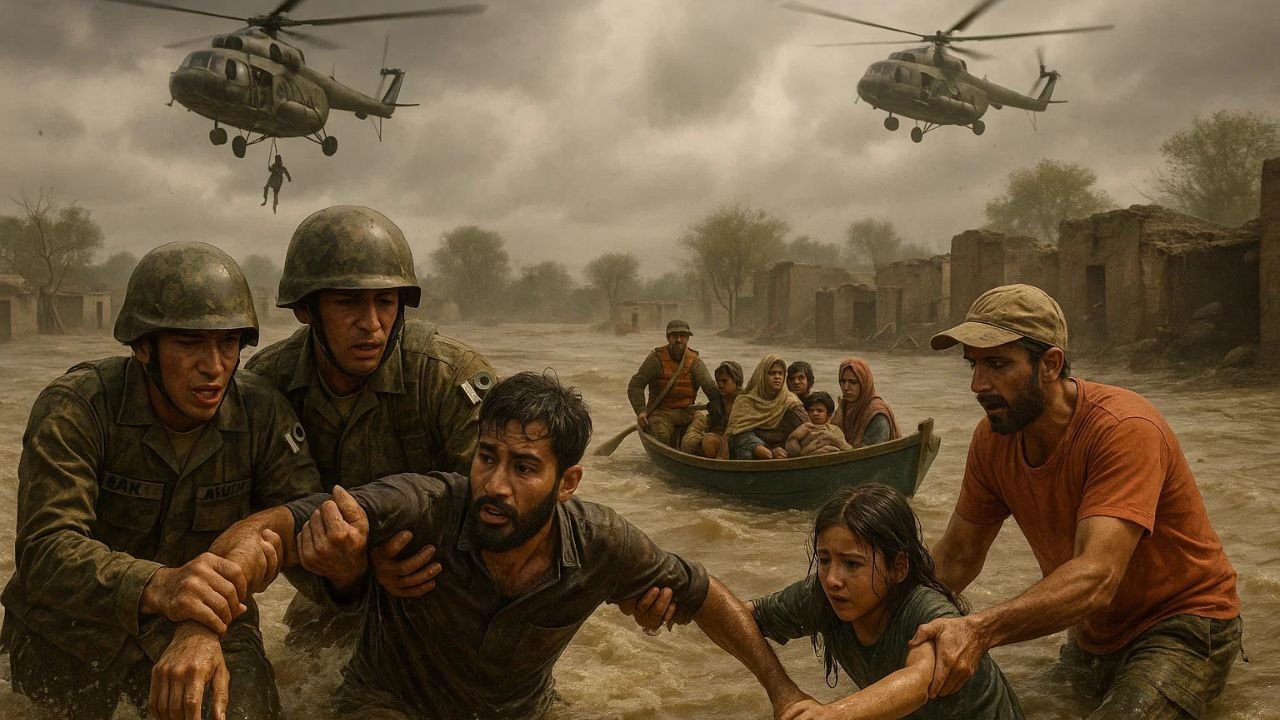
The Pakistan Army and Air Force played a leading role in the rescue effort. By Aug 19, military spokesmen reported that tens of thousands of people had been evacuated from flooded valleys by helicopter, truck convoys and emergency boats. Hundreds of troops joined local rescuers. “Our engineering teams are clearing debris and restoring infrastructure,” said an army colonel at some sites they even brought in bulldozers to divert overflowing streams (reuters). Military hospitals sent mobile medical units and airlifted essential medicines to cut-off clinics. Army helicopters dropped food, clean water and blankets into mountain villages that trucks could no longer reach (apnews).
The civilian disaster agency (NDMA) and its provincial counterparts set up command centers to coordinate relief. Relief camps sprang up in Buner, Swat and other districts, where evacuees received food rations, tents and medical care. Army run hospitals treated dozens of wounded and sick flood victims free of charge. Rescue 1122 the national emergency service reported retrieving survivors from collapsed homes and delivering them to trauma centers in Peshawar and Islamabad. In Karachi, municipal authorities drained clogged underpasses and dispatched sanitation crews in riot gear to flush out the city’s streets. The chief secretary of Sindh province announced that deputy commissioners and PDMA teams would stay on high alert, and he instructed all drain outlets to be cleared immediately (dawn).
International and local charities also rushed to help. The Pakistan Red Crescent Society, backed by IFRC, was on the ground distributing shelter kits and water purifiers. The British Red Cross noted that “essential support, including shelter, food, clean water and medical aid” was being provided to flood survivors (Redcross). Islamic Relief an international NGO reported working in Buner, Swat and Shangla, with an initial cash appeal of £500,000 (about $670,000) for urgent relief (ARABNEWS). One major charity, the Alkhidmat Foundation, said it had mobilized some 6,000 volunteers across the country (over 1,100 of them in Buner alone) and had already spent roughly Rs250 million (nearly $900,000) on immediate relief supplies. Volunteers handed out hot meals, clothing and kitchen sets; they also helped clear mud from flooded homes to make them habitable again. Two mobile medical clinics staffed by volunteer doctors were operating round the clock in Buner and Shangla. Aid groups distributed bottled water and set up temporary filtration units to prevent a looming outbreak of waterborne diseases.
Despite these efforts, local officials warned that much more work lay ahead. With houses, shops, and crops in ruins, rehabilitation and reconstruction needs will be enormous. Charities are now mapping damaged homes and farmland so they can assist survivors with rebuilding. Islamic Relief emphasized that later phases would require major investment in repairing irrigation channels, roads and other infrastructure to help communities recover (ARABNEWS).
Voices from the Flood
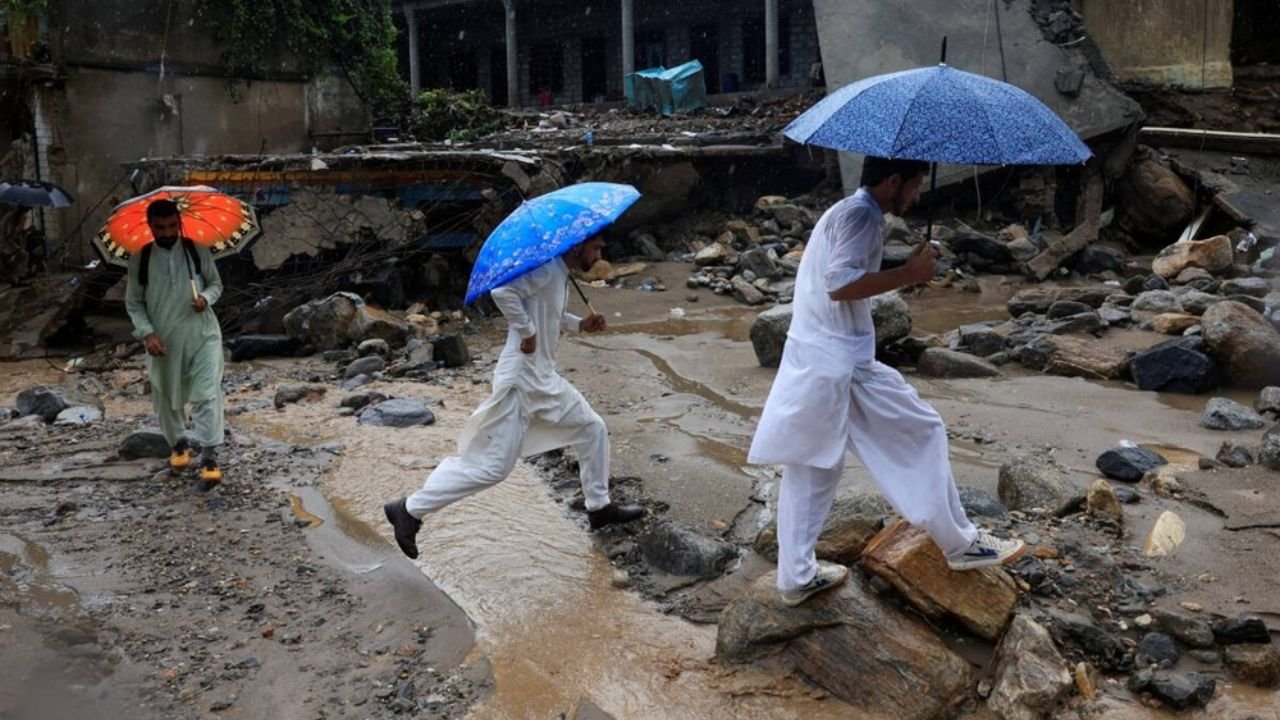
The scale of the disaster was painfully clear in the words of those caught in it. In remote valleys of Khyber Pakhtunkhwa, survivors described how the floods struck suddenly and mercilessly. A local volunteer in Buner lamented that “dozens of bodies are still buried under the mud and rocks, which can only be recovered with heavy machinery” yet continued showers were eroding access roads and hampering the search. Another villager in Buner, Ghulam Hussain, said people had taken cover under damaged sheds and rocks to survive the flood surge. “Even a little rain now scares us,” he told AFP, recalling how the storm “swept away the unsuspecting people” in minutes (aljazeera).
In the cities, ordinary people also voiced frustration and fear. Many Karachi commuters posted photos of flooded highways and long traffic jams to social media, questioning why forecasters did not warn of the deluge. On August 19, Dawn.com noted that “visuals shared widely on social media showed main roads and arteries of the city submerged during rush hour, with traffic gridlocked as a result” (dawn). Commuters who arrived home late that night described hours spent wading through waist deep water. In Rawalpindi, a clothing factory owner Muhammad Shabbir spoke on the phone amid the storm: “We’re poor people here, and nine feet of water flooded our homes. People have suffered huge losses everything, even basic utensils. No one from the government has checked on us or offered help. It’s like we’re invisible,” he told Reuters.
These personal accounts underscored how quickly the crisis unfolded. As one 20 year old in Swabi put it: “It started with a horrible noise. and then in seconds everything was gone” (reuters). In Karachi, young designer Anosha said her car stalled in rising water and she feared for her life: “I panicked,” she said, describing the city’s streets turned into torrents. Emergency workers and neighbors rushed in to pull dozens from dangerous situations that day: traffic police waded into fast-flowing gutters to help stranded pedestrians, and rescue boats plucked families from rooftops.
Social media also played a role in connecting people and publicizing the needs. Videos of flooded neighborhoods were widely circulated, and appeals for help for boats, food, fuel for generators spread through WhatsApp groups and Twitter. Although official sources provided the casualty counts, many residents turned to social media for real time updates and to share their own videos and photos of the devastation. In the days after the storm, online maps of blocked roads and lists of open shelters appeared on local NGO pages, reflecting how communities mobilized to support each other even as formal relief agencies rushed in.
Historical Context: A Nation Repeatedly Struck by Floods
Pakistan’s lethal monsoon floods are, sadly, not new. The country lies in a climatically vulnerable zone where summer rains and melting snow combine to test infrastructure every year. Authorities and analysts immediately drew parallels to past catastrophes. One alarming comparison was to the 2022 floods, which inundated about a third of the country and killed roughly 1,700 people. Officials warned that the 2025 rains could become as devastating, especially in the north: both NDMA and climate experts noted that Pakistan’s 2025 monsoon rains so far exceeded normal intensity, a pattern they attribute in part to climate change (aljazeera). In fact, as of Aug 18 NDMA reported that this season’s monsoon had already claimed over 650 lives far above the decade average.
The memories of historical floods weigh heavily on Pakistani society. In 2010, catastrophic floods affected an estimated 14–20 million people and killed nearly 2,000, although that event is now somewhat overshadowed by 2022’s scale (10 million displaced then). Today’s emergency is thus seen through the lens of those experiences: many commentators and officials openly cited 2022 when discussing the 2025 floods. Dawn newspaper noted that critics blamed decades of “neglect” and illegal building in riverbeds – lessons painfully learned in past deluges (dawn).
In contrast to 2022, when international aid was later requested en masse, the government says it has so far coped with domestic resources. Still, experts warn the recovery phase will be long. “It’s not just about moving on after the waters recede,” said a relief coordinator in Islamabad. “We have to rebuild homes, roads and livelihoods.” World Bank and climate analysts have consistently found that Pakistan is among the world’s most disaster-prone countries exposed to flooding, droughts, and now more frequent heat extremes. Each year the monsoon threatens millions of people, and a major flood can wipe out months of development gains.
For now, officials remain on high alert. Pakistan’s meteorological department and NDMA are tracking new rain systems developing over the Indian Ocean and Bay of Bengal, as satellite images show moisture streaming toward the region. Federal authorities have urged citizens to stay vigilant and to heed evacuation orders in low lying areas. Meanwhile, relief agencies warn that the coming weeks will be critical for preventing a secondary crisis of hunger and disease among the displaced.
The August 19 floods have been a stark reminder of this reality. As one Islamabad schoolteacher who volunteered in relief camps put it, “We’re all afraid of the rains now.” Pakistanis are once again testing their resilience against nature’s fury an ordeal their country has faced many times, and one which will demand solidarity, resources, and better planning if its consequences are to be fully overcome.
Alkhidmat Foundation: On-the-Ground Relief Efforts
Amid the chaos and devastation, the Alkhidmat Foundation has emerged as a beacon of hope. According to their most recent updates, nearly 695 lives have been lost nationwide since June 26 underscoring the monsoon season’s deadly toll so far. Communities in Punjab have seen 164 fatalities and 216 homes damaged. Khyber Pakhtunkhwa (KP) continues to bear the brunt with 390 lives lost and 709 houses destroyed by flash floods. In Sindh, heavy rains have claimed 28 lives and severely impacted 87 homes. Devastation also strikes Balochistan (20 deaths, 82 homes), Gilgit-Baltistan (32 deaths, 593 homes affected), Azad Jammu & Kashmir (15 deaths, 713 homes damaged), and Islamabad Capital Territory (8 deaths, 61 homes damaged).
