
Fake Job Offers Are Tricking Thousands Online
Table of Contents
Introduction
Job Scams in 2026 have become one of the fastest growing online crimes. Every day, thousands of job seekers receive fake offers promising high salaries, work from home opportunities, and quick hiring without interviews. Many victims are students, fresh graduates, and unemployed people who are urgently looking for work.
These job scams are part of a wider wave of online fraud happening in 2026. For a broader understanding of how scammers operate online and how to stay protected, you can also read our detailed guide on Online Scams in 2026: How to Stay Safe.
Scammers are now more professional than ever. They copy real company names, logos, and employee profiles. They create fake websites and social media accounts. Some even conduct fake interviews on chat apps like WhatsApp and Telegram to look real. Because of this, many people cannot easily tell the difference between real and fake job offers.
This article explains what Job Scams in 2026 are, how they work, common types, warning signs, and how you can protect yourself from losing money and personal data.
What Are Job Scams in 2026?
Job Scams in 2026 are fake job offers designed to cheat people. Scammers pretend to be HR managers, recruiters, or company representatives. They contact job seekers and offer attractive jobs with high pay and simple tasks.
The main purpose of these scams is to:
- Steal money (registration fees, training fees, visa fees)
- Steal personal data (ID cards, bank details, phone numbers)
- Use victims for money laundering or fake online tasks
In many cases, victims realize the truth only after sending money or sensitive information. By then, the scammers disappear.
How Job Scams in 2026 Target Job Seekers Online
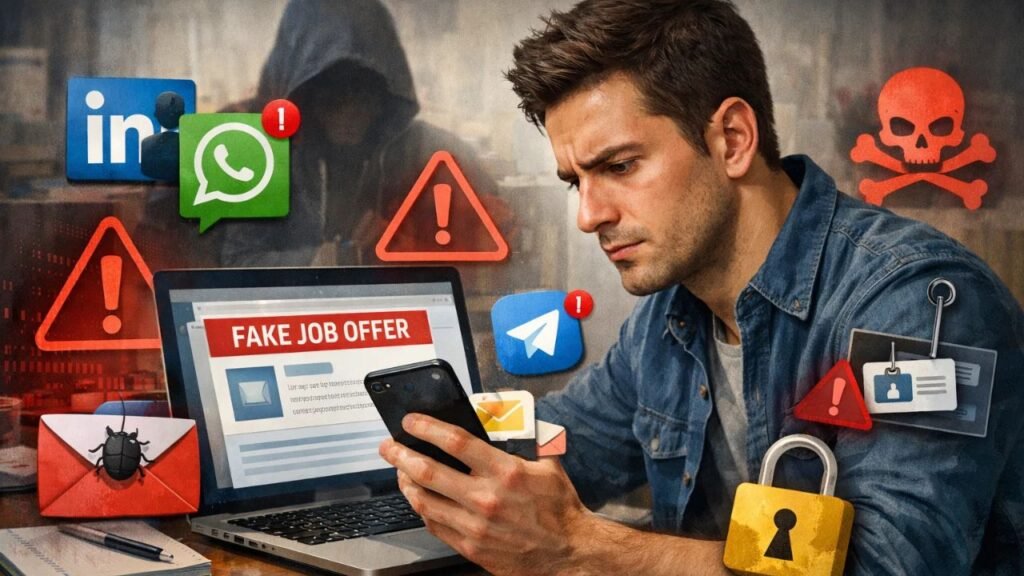
Scammers find victims where people search for jobs. In Job Scams in 2026, fake recruiters mostly use popular online platforms to look trustworthy:
- LinkedIn – Fake HR profiles offering remote jobs
- WhatsApp – Direct messages with “urgent hiring” offers
- Telegram – Groups posting daily fake vacancies
- Gmail – Emails pretending to be from real companies
They may copy content from real company websites. Some scammers even use the names of real employees to look genuine. Because of this, many people trust them and respond.
Common Types of Job Scams in 2026
There are many forms of Job Scams in 2026. Below are the most common types:
Fake Work from Home Jobs
Scammers offer simple online tasks like data entry, product reviews, or social media work. They promise high daily income with no skills required. After initial contact, they ask for a “registration fee” or “tool fee” to start the job.
Overseas Job and Visa Scams
Victims are promised jobs in foreign countries. Scammers ask for money for visa processing, medical tests, or travel documents. After payment, the fake recruiter disappears.
Training Fee Job Scams
Fake companies claim that you must complete paid training before joining the job. After you pay the training fee, there is no job.
Fake Interview Scams
Some scammers conduct chat based interviews and send fake offer letters. They never arrange real video calls or office visits. The goal is to make the offer look official.
Data Collection Scams
In this type of Job Scams in 2026, scammers do not ask for money immediately. Instead, they collect copies of ID cards, bank details, and phone numbers. This data is later used for fraud or identity theft.

Warning Signs of Job Scams in 2026
You can avoid Job Scams in 2026 if you notice these red flags:
- You are selected without any real interview
- Salary is very high for simple work
- The recruiter asks for money to get the job
- Email is from free services, not official company domain
- The recruiter pressures you to decide quickly
- The company website looks new or incomplete
Real companies do not ask for money to offer you a job. They also follow proper hiring steps.

How to Verify a Job Offer in 2026
Before accepting any job offer, follow these steps:
- Visit the official company website and check contact details
- Search the company name on Google
- Verify the recruiter’s profile on LinkedIn
- Call the company using official phone numbers
- Check if the email domain matches the company website
Taking a few minutes to verify can save you from becoming a victim of Job Scams in 2026.

How to Protect Yourself from Job Scams in 2026
To stay safe from Job Scams in 2026, follow these simple and practical steps:
- Never pay any fee for a job, interview, or training
- Do not share CNIC, passport, bank details, or OTP codes
- Avoid clicking unknown links sent by recruiters
- Do not trust offers that sound too good to be true
- Check the company website and contact details carefully
- Verify recruiter profiles on LinkedIn
- Use strong privacy settings on social media and job platforms
For more general scam safety tips that apply across all types of online fraud, read our detailed guide:
Online Scams in 2026: How to Stay Safe
This will help you understand common scam patterns beyond job offers and keep yourself protected online.

What To Do If You Become a Victim of Job Scams in 2026
If you fall victim to Job Scams in 2026, take action quickly:
- Report the fake profile on LinkedIn
- Block and report the scammer on WhatsApp
- Inform your bank if money was sent
- Change your passwords if data was shared
- Report the case to your local cyber crime authority
Reporting helps protect others from falling into the same trap.
Why Job Scams in 2026 Are Increasing
There are several reasons why Job Scams in 2026 are rising:
- More people are searching for remote jobs
- Economic pressure makes people desperate
- Scammers use AI tools to look more professional
- Fake websites and profiles are easy to create
- Online hiring is common, making verification harder
Because online job hunting is now normal, scammers take advantage of this trend.

Final Thoughts
Job Scams in 2026 are a serious threat to job seekers around the world. Fake recruiters are becoming smarter and more convincing. However, by staying alert, verifying job offers, and never paying money for jobs, you can protect yourself.
Always remember:
If a job offer looks too good to be true, it probably is.
Stay informed, stay careful, and help others by sharing awareness about Job Scams in 2026.
For More Information (Trusted Sources)
- Federal Trade Commission – Job scam awareness and safety tips
- FBI – Online fraud and employment scam warnings
- Action Fraud – How to report job scams and online fraud
